

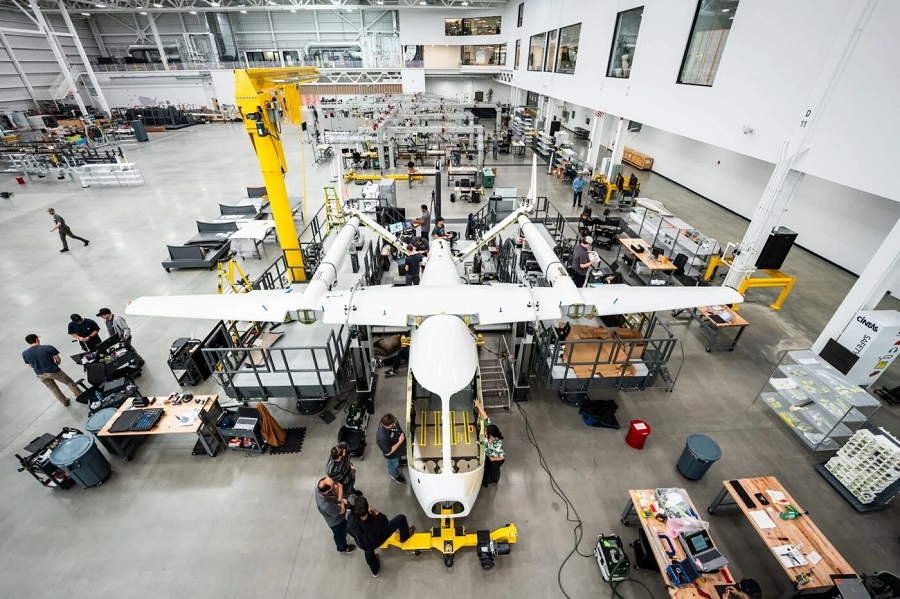
The commercial aviation sector is quietly undergoing its most consequential manufacturing transformation since the dawn of the jet age. For nearly a century, airframe manufacturing centered on riveting aluminum sheets around heavy internal ribbing, powering the resulting craft with kerosene-fueled turbofans. While early demonstrator projects proved that electric propulsion could get an aircraft off the ground, turning clean aerodynamic concepts into certified, mass-producible vehicles is an entirely different undertaking.
The primary bottleneck facing electric aviation today is not aerodynamic theory or pilot interest; it is the factory floor. Building commercially viable electric commuter planes and urban air mobility aircraft requires unprecedented power-to-weight ratios, tight structural tolerances, and production cadences that traditional aerospace facilities were never designed to handle. To cross the chasm from experimental hand-built prototypes to high-rate industrial output, aerospace manufacturers are pioneering advanced production technologies that borrow from automotive scale while adhering to uncompromising airworthiness standards.
Automated Fiber Placement and High-Rate Composite Fabrication
Because current battery chemistries offer significantly lower specific energy than aviation fuel, electric aircraft manufacturers must aggressively eliminate dead weight across every square inch of the airframe. Every pound shaved from the fuselage or wing structure translates directly into battery capacity, passenger payload, or operational range. As a result, primary structures for electric aircraft have almost entirely abandoned sheet metal in favor of carbon-fiber-reinforced polymers.
Fabricating complex, aerodynamically contoured composite airframes by hand is notoriously slow, labor-intensive, and susceptible to minute human inconsistencies. To scale production, aerospace factories are deploying automated fiber placement systems alongside automated tape laying robotics.
These automated cells use multi-axis robotic arms to deposit continuous carbon-fiber tows directly along pre-programmed load paths with millimeter precision. By strictly aligning the directional fibers to match the exact aerodynamic and mechanical stresses the aircraft encounters during flight, engineers can eliminate redundant material. Furthermore, the industry is transitioning away from conventional, energy-hungry thermal autoclaves toward out-of-autoclave resin transfer molding and quick-curing thermoplastic composites. Thermoplastics can be reheated, stamped, and welded in minutes rather than hours, reducing manufacturing cycle times from days to repeatable shifts while allowing factories to recycle structural offcuts.
Additive Manufacturing for Complex Thermal and Propulsion Systems
Electric propulsion alters the internal physics of an aircraft. High-voltage inverters, megawatt-class electric propulsion units, and distributed motor arrays generate intense, localized thermal loads. Dissipating that heat in flight without introducing drag-inducing radiator scoops or heavy cooling pumps requires manufacturing geometries that subtractive CNC machining cannot execute.
Additive manufacturing has become an essential pillar of electric aircraft powertrain production. Using laser powder bed fusion and electron beam melting, manufacturers build monolithic aluminum and titanium components featuring internal, conformal cooling channels:
-
Integrated Motor Housings: Stator jackets and rotor casings are printed with microscopic, fluid-carrying lattices embedded directly within the structural walls, placing liquid coolant within millimeters of heat-generating copper windings.
-
Consolidated Structural Brackets: Components that once required assembling a dozen individually machined parts, bolts, and shims are printed as single, organically optimized nodes, cutting part counts by more than eighty percent while eradicating joint fatigue.
-
Micro-Channel Heat Exchangers: Thin-walled, surface-optimized heat exchangers can be manufactured directly into wing leading edges or nacelle ducts, turning the airframe surface itself into an aerodynamic heat sink.
By pairing 3D printing with algorithmic topology optimization, engineers shave substantial weight from critical drivetrain assemblies while creating internal fluid dynamics that keep power electronics within safe operating temperatures under continuous peak climb loads.
Structural Battery Integration and Automated Pack Assembly
In first-generation electric transportation, batteries were treated as modular cargo: heavy, self-contained bricks bolted inside a chassis or cargo bay. In electric aerospace, carrying a passive dead-weight battery box is non-viable. Manufacturers are adopting cell-to-chassis structural battery designs, where the battery enclosure serves as an integral, load-bearing member of the aircraft wing or lower fuselage floor.
Manufacturing a structural battery pack demands strict production control. High-voltage packs must endure severe mechanical vibrations, withstand bird strikes, and provide absolute thermal runaway containment without adding parasitic mass. Robotic dispensing systems apply structural thermal adhesives with extreme volumetric accuracy, securing thousands of cylindrical or pouch cells directly into rigid composite honeycomb matrices.
Simultaneously, factories are integrating automated flame-barrier placement. Thin ceramic matrix composites and endothermic aerogel blankets are automatically layered between cell modules. These automated barriers prevent a single compromised cell from triggering neighboring modules during an abuse event. By combining automated potting, laser-welded current collectors, and structural composite skins, the resulting assembly delivers rigorous crashworthiness, structural stiffness, and electrical insulation in a single cohesive unit.
Megawatt-Scale Motor Production and High-Voltage Wiring Automation
Automotive electric motors are built for ground-level duty cycles, where weight is secondary to production cost. In aviation, electric motors must deliver immense continuous power densities while operating reliably at varying atmospheric pressures and high altitudes.
Manufacturing these electric propulsion units requires adapting high-precision techniques, including automated hairpin stator winding. Rather than winding round copper wire through manual feeding, specialized robotic cells bend, insert, and laser-weld rectangular copper conductor bars into stator slots. Rectangular hairpins maximize the amount of conductive copper packed into the electromagnetic core, optimizing electrical efficiency and heat dissipation.
Operating at high voltages—frequently between 800 and 1,000 volts to minimize current and wire thickness—introduces the danger of partial electrical discharge, especially in thin, low-pressure air. Aerospace factories are utilizing specialized vacuum-pressure impregnation chambers to infuse motor windings with advanced corona-resistant dielectric resins. Additionally, to avoid the immense weight penalties of conventional copper wiring harnesses, manufacturers are turning to automated busbar fabrication, integrating solid aluminum conductors and composite shielding directly into pre-formed composite wire raceways embedded within the fuselage structure.
Digital Twins and In-Line Quality Verification
Traditional aerospace fabrication often relies on retrospective quality checks: parts are formed, cured, and then subjected to ultrasonic non-destructive testing at the very end of the line. If a microscopic void or delamination is discovered in a cured composite wing skin, the entire multi-thousand-dollar part is scrapped, throwing production schedules into chaos.
Electric aircraft manufacturing facilities are built around closed-loop digital twin ecosystems. During composite layup, high-resolution optical cameras and laser line scanners monitor fiber orientation, tow gap spacing, and resin moisture in real time. Machine vision algorithms analyze each layer against design tolerances, catching misalignments before curing begins.
On the propulsion line, automated test benches run digital simulations against every freshly assembled motor and inverter, recording electrical impedance, thermal dissipation curves, and vibration acoustics. This telemetry is tied directly to the digital birth record of that specific airframe, ensuring full end-to-end traceability required by civil aviation regulators while creating an automated feedback loop that continuously refines factory tooling.
The commercialization of electric aviation will not be determined solely by visionary designs or corporate capital. It will be decided by the speed, precision, and repeatability of modern manufacturing systems. As composite automation, additive thermal engineering, structural battery integration, and closed-loop digital monitoring converge on the factory floor, the aerospace sector is assembling the physical infrastructure needed to make quiet, sustainable flight an everyday reality.
Comments are closed.