

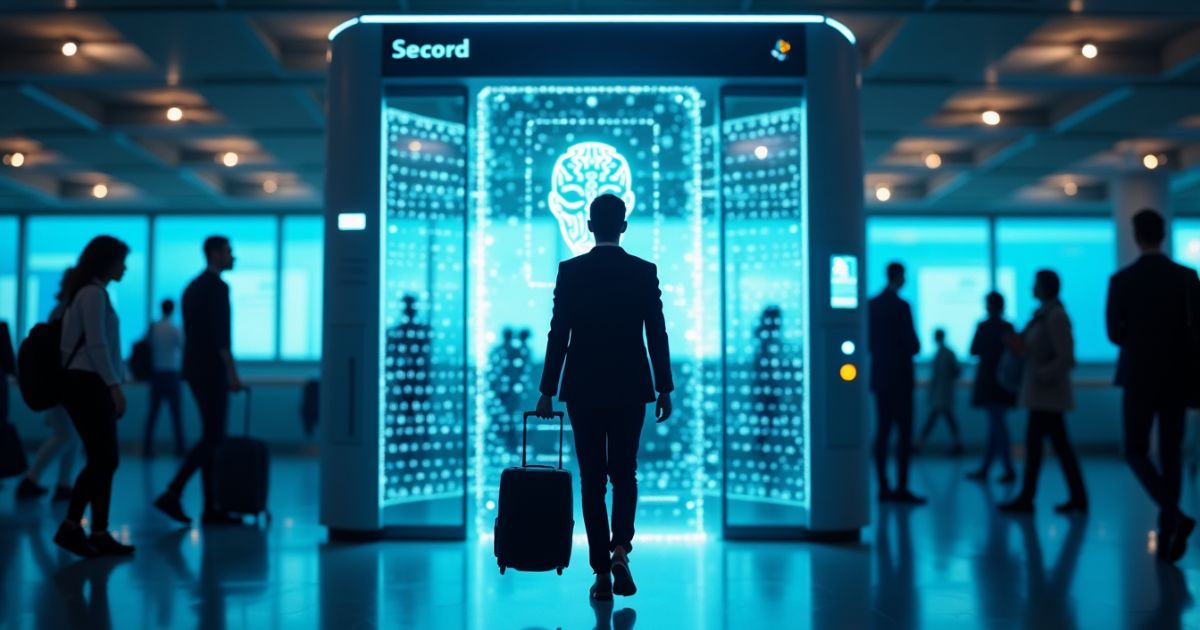
Security is no longer defined by fences, checkpoints, guards, and physical barriers alone. As borders become more connected and critical infrastructure becomes increasingly dependent on digital systems, the ability to identify, assess, and respond to threats is changing rapidly. Technology now sits at the centre of modern security strategies, helping governments and infrastructure operators understand what is happening across large and complex environments.
From artificial intelligence and advanced sensors to autonomous systems and sophisticated communications networks, the next generation of security will depend on how effectively different technologies work together. The objective is not simply to detect threats, but to provide decision-makers with reliable information early enough to respond appropriately.
The Changing Nature of Security
Modern borders can stretch across thousands of miles and include deserts, mountains, rivers, coastlines, airports, and densely populated areas. Traditional approaches cannot provide continuous visibility across every location. Technology helps close that gap by combining surveillance cameras, radar, thermal imaging, unmanned systems, and other sensors into broader monitoring networks.
Artificial intelligence is becoming particularly important because modern security systems can generate enormous amounts of information. Human operators cannot realistically examine every camera feed or sensor signal simultaneously. AI-assisted systems can help identify unusual activity, distinguish relevant events from routine movement, and prioritise information that may require human attention. This does not necessarily remove people from the decision-making process. Instead, it can give trained personnel better information with which to make decisions.
The same principle applies to critical infrastructure. Airports, transportation networks, energy facilities, ports, telecommunications systems, and water infrastructure all require protection from physical and digital threats. As these systems become more interconnected, security increasingly depends on visibility across multiple layers. A suspicious event that appears insignificant in isolation may become important when combined with information from another sensor or network.
AI, Sensors, and Real-Time Awareness
One of the most significant developments in security technology is the movement from passive surveillance toward real-time situational awareness. Conventional surveillance often requires personnel to observe events and determine what matters. Newer systems can process information continuously and provide alerts when predefined or machine-learning-based patterns emerge.
Advanced sensors are central to this development. High-resolution cameras can provide visual information, thermal systems can operate in low-light environments, and radar can help detect movement across areas where cameras may be ineffective. When these technologies are integrated, security teams can build a more complete picture of their surroundings rather than depending on a single source of information.
Unmanned aerial systems are another important component. Drones can cover difficult terrain, inspect infrastructure, and provide information without immediately placing personnel in potentially dangerous environments. Autonomous and semi-autonomous technologies may expand these capabilities further. However, reliability, cybersecurity, privacy, regulatory requirements, and appropriate human oversight remain important considerations. Industry experts and public institutions increasingly emphasise that sophisticated technology works best when it supports clearly defined operational procedures rather than being treated as a substitute for trained personnel.
Investing in the Security Technology Ecosystem
The growth of advanced security technology has also attracted attention from investors looking at companies involved in defence, surveillance, communications, cybersecurity, and infrastructure protection. Investors researching this sector may encounter companies with exposure to several of these long-term technological trends, including those researching Elbit Systems stock as part of a broader examination of the defence and security industry.
Understanding this investment landscape requires looking beyond a company’s headline products. Investors may consider research and development capabilities, government contracts, international exposure, operating performance, technological specialisation, and the broader spending environment. Defence and infrastructure technology can also involve lengthy procurement cycles and significant regulatory requirements, meaning that business performance may not always move in a straight line.
The wider security ecosystem is similarly diverse. Some companies focus on sensors and surveillance, while others develop command-and-control systems, communications infrastructure, unmanned platforms, cybersecurity tools, or data-processing technologies. For investors, understanding where a company sits within this ecosystem can provide useful context when assessing its potential opportunities and risks.
Protecting Critical Infrastructure
Border security is only one part of the larger infrastructure-security challenge. The systems that keep societies functioning are becoming increasingly digital, creating new opportunities for efficiency while also introducing additional vulnerabilities. A power station, airport, shipping terminal, or communications network may rely on interconnected software and hardware that must be protected against both physical interference and cyber threats.
This has encouraged a more integrated approach to security. Instead of treating cybersecurity, physical security, and operational technology as completely separate disciplines, organisations increasingly need to understand how they interact. An attack on a digital system could affect physical operations, while a physical intrusion could provide access to sensitive digital equipment.
Conclusion: Building a More Resilient Future
Technology is reshaping how societies protect borders and the infrastructure on which everyday life depends. AI can help process information, advanced sensors can improve visibility, unmanned systems can extend operational reach, and integrated platforms can help security teams respond with greater awareness. These capabilities can become increasingly valuable as physical and digital security challenges continue to overlap.
However, the foundation of effective security remains broader than technology itself. Responsible implementation, trained personnel, cybersecurity safeguards, clear policies, and ongoing investment in resilience all play important roles. As security requirements evolve, organisations that combine technological innovation with careful planning and human oversight will be better positioned to address an increasingly complex environment.